
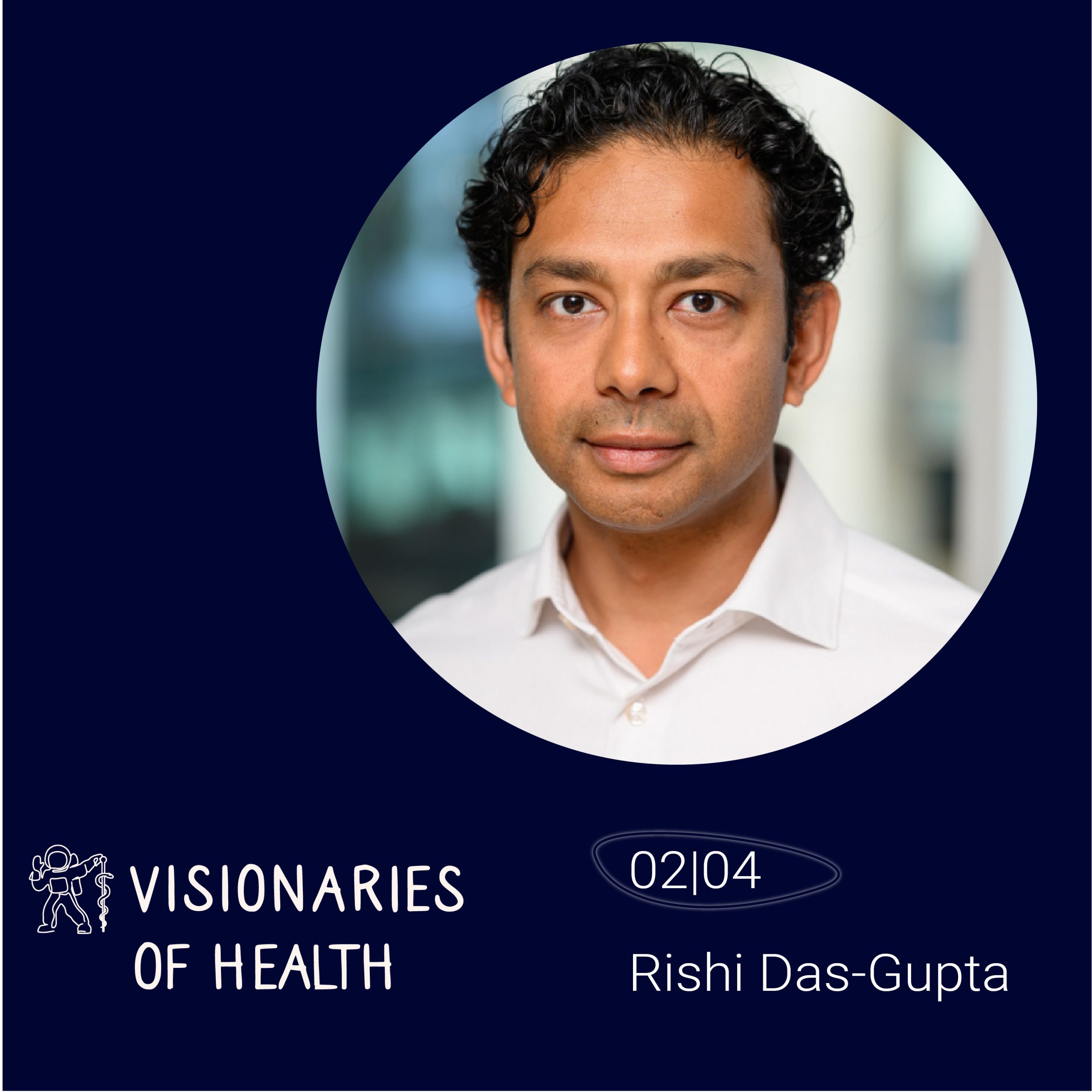
How do healthcare innovations move beyond pilot projects and actually reach patients at scale? That is the central question explored in a fascinating episode of Visionaries of Healthcare, where Inga Bergen sits down with Rishi Das-Gupta, one of the leading voices in healthcare innovation in the United Kingdom.
Their conversation offers valuable insights into the challenges facing modern healthcare systems, the growing role of artificial intelligence, and the reasons why so many promising innovations never make it into routine clinical practice. Anyone interested in digital health, healthcare transformation, or innovation adoption will find this episode both inspiring and highly practical.
Who Is Rishi Das-Gupta?
Rishi Das-Gupta is the Chief Executive of the Health Innovation Network (HIN) South London, the largest regional health innovation network in England. In this role, he works at the intersection of healthcare delivery, technology, research, and business innovation.
His professional background is uniquely diverse. Rishi Das-Gupta trained as a physician, held senior leadership roles in digital transformation and information technology within the NHS, worked in consulting, and founded startups himself. This combination gives him a rare perspective on healthcare innovation. He understands the realities of clinical practice while also recognizing the operational, technological, and economic challenges involved in transforming healthcare systems.
Through the Health Innovation Network, he helps innovators bring solutions to market, supports healthcare organizations in adopting new technologies, and evaluates whether innovations truly improve patient outcomes. Throughout the conversation, one theme becomes clear: innovation only creates value when it is successfully implemented.
The Health Innovation Network: Connecting Innovation and Healthcare Delivery
At the beginning of the discussion, Rishi Das-Gupta explains the role of the Health Innovation Network and the three core areas in which it operates. First, the organization supports innovators in developing and commercializing their products. Second, it helps successful innovations spread across the healthcare system. Third, it conducts independent evaluations to determine whether new technologies actually deliver measurable benefits.
This third area is particularly important. Many innovations receive significant attention because of their technical capabilities, yet questions around implementation, adoption, economics, and long-term impact often remain unanswered. The Health Innovation Network aims to close this gap by generating evidence that healthcare organizations can trust.
The organization works with a broad range of stakeholders, including NHS providers, community healthcare services, social care organizations, schools, and even the prison system. As a result, it has a comprehensive understanding of the challenges facing healthcare across different environments.
Moving from a Push Model to a Pull Model of Innovation
One of the most interesting themes in the conversation is how healthcare systems should approach innovation. Traditionally, innovation follows a push model. Companies develop products and then try to convince healthcare organizations to adopt them.
Rishi Das-Gupta argues for a different approach. Instead of starting with technology, healthcare systems should begin by identifying their most pressing problems and then seek out solutions that address those needs.
This shift from a push model to a pull model is becoming increasingly important in the age of artificial intelligence. New technologies emerge every day, but healthcare organizations need to focus on solving real-world challenges rather than implementing technology simply because it exists. According to Rishi Das-Gupta, the most successful innovations are those that respond directly to clearly defined healthcare needs.
Why London Is a Unique Environment for Healthcare Innovation
The discussion also explores London’s healthcare innovation strategy and why the city is uniquely positioned to drive change. With a population of nearly ten million people, world-class universities, a thriving technology sector, strong access to capital, and a highly diverse population, London offers an ideal environment for innovation.
At the same time, this diversity creates complexity. Innovators often struggle to identify the right healthcare organizations, clinical leaders, or patient groups to work with. This is where organizations such as the Health Innovation Network play a critical role. They help innovators navigate the healthcare ecosystem and connect them with the right partners to test, refine, and scale their solutions.
The Biggest Challenges Are Not Technological
One of the strongest messages from the conversation is that technology is rarely the main obstacle.
Instead, Rishi Das-Gupta highlights three major barriers to innovation:
- Funding and reimbursement
- Procurement and scaling
- Implementation within existing workflows
Many innovations require investment today while generating benefits years later. In addition, the organization that pays for an innovation is often not the same organization that ultimately benefits from it. Preventive healthcare provides a perfect example. Investments in prevention may generate significant savings for hospitals, but the initial costs often occur in primary care settings. As a result, innovation cannot be evaluated in isolation. It must be viewed within the context of the entire healthcare system.
Why Scaling Healthcare Innovation Is So Difficult
The conversation then turns to one of the most persistent challenges in digital health: scaling. Many startups successfully solve a problem for a single hospital or healthcare provider. However, when they attempt to expand to additional organizations, they encounter different IT systems, workflows, governance structures, and patient populations. What works perfectly in one environment may require substantial adaptation elsewhere.
For this reason, Rishi Das-Gupta encourages innovators to test their solutions across multiple healthcare settings as early as possible. A product that succeeds in several different environments is far more likely to scale successfully.
Programs such as the DigitalHealth.London Accelerator are specifically designed to help companies validate their solutions across diverse healthcare organizations before pursuing broader adoption.
Artificial Intelligence Must Address Real Problems
Artificial intelligence naturally plays a prominent role in the discussion. Inga Bergen points out the enormous speed of innovation in AI and contrasts it with the comparatively slow pace of healthcare systems. While acknowledging this challenge, Rishi Das-Gupta remains optimistic. He believes the most successful AI applications are those that solve specific problems rather than trying to be universal solutions.
Not every technology needs to serve every patient or clinician. Instead, healthcare organizations should focus on identifying where AI creates meaningful value and then implement it thoughtfully. Technology alone is not enough. Sustainable impact comes from combining technology with effective processes, data, governance, and organizational change.
Ambient Voice Technology: A Case Study in Successful Implementation
One of the most compelling parts of the conversation focuses on ambient voice technology. These AI-powered tools automatically capture clinical conversations and generate medical documentation. While many vendors emphasize time savings, Rishi Das-Gupta describes a broader range of benefits observed during pilot projects across London.
Clinicians are able to focus more fully on their patients rather than on computer screens. Documentation quality often improves. Communication becomes more natural. In many cases, clinician satisfaction also increases.
What makes the Health Innovation Network’s approach particularly interesting is how these technologies were evaluated. Instead of limiting testing to one type of clinical setting, they were deployed across emergency departments, mental health services, outpatient clinics, community settings, and even home visits. This allowed healthcare leaders to identify where the technology delivered the greatest value and where implementation challenges were most likely to occur.
Data as the Foundation for Better Decisions
Another key topic is the importance of data. Through the OneLondon data platform, healthcare organizations across London can evaluate innovations at scale and understand how they affect different populations.
This makes it possible to answer critical questions:
- Who is using the innovation?
- Which patient groups benefit most?
- Where are adoption gaps occurring?
- What are the long-term health and economic outcomes?
Rishi Das-Gupta repeatedly emphasizes the importance of independent evaluation. Vendor-generated evidence alone is not sufficient. Healthcare systems need objective data and rigorous analysis to determine whether an innovation genuinely improves care.
This evidence-based approach helps organizations make smarter investment decisions while reducing the risk associated with adopting new technologies.
What the UK and Germany Can Learn from Each Other
The conversation also touches on Germany’s DIGA framework for digital health applications. Rishi Das-Gupta views Germany’s experience with great interest. At the same time, the UK has taken a somewhat different approach by focusing on standardized evaluation processes, integrated data infrastructures, and regional adoption models.
Both countries have valuable lessons to share. Germany has pioneered reimbursement pathways for digital health applications, while London has developed strong capabilities around implementation, evaluation, and large-scale adoption. The exchange of ideas across healthcare systems may ultimately accelerate innovation across Europe.
The Real Challenge Is Implementation
As the discussion draws to a close, one message stands out above all others. The biggest challenge in healthcare is not innovation itself. New ideas emerge every day. Technologies continue to advance at an extraordinary pace. The real challenge is implementation—integrating innovation into healthcare systems, adapting workflows, aligning incentives, and ensuring that solutions reach the people who need them most.
This focus on adoption and execution explains why Rishi Das-Gupta has devoted so much of his career to healthcare management and innovation leadership. For him, innovation only matters when it improves outcomes in the real world.
Final Thoughts: Why You Should Listen to This Episode
The conversation with Rishi Das-Gupta is a must-listen for anyone interested in the future of healthcare. Rather than focusing on technology hype, the discussion explores the practical realities of transforming healthcare systems. Rishi Das-Gupta explains why implementation, evaluation, data, and collaboration are just as important as innovation itself.
For healthcare leaders, innovators, entrepreneurs, clinicians, and policymakers, the episode offers valuable lessons on how to move from promising ideas to measurable impact. Most importantly, it provides a hopeful vision for the future—one where healthcare systems can adopt innovation faster, learn from evidence, and ultimately deliver better care for patients.
If you want to understand what it truly takes to scale healthcare innovation, this episode of Visionaries of Healthcare deserves a place at the top of your listening list.
Leave a Reply